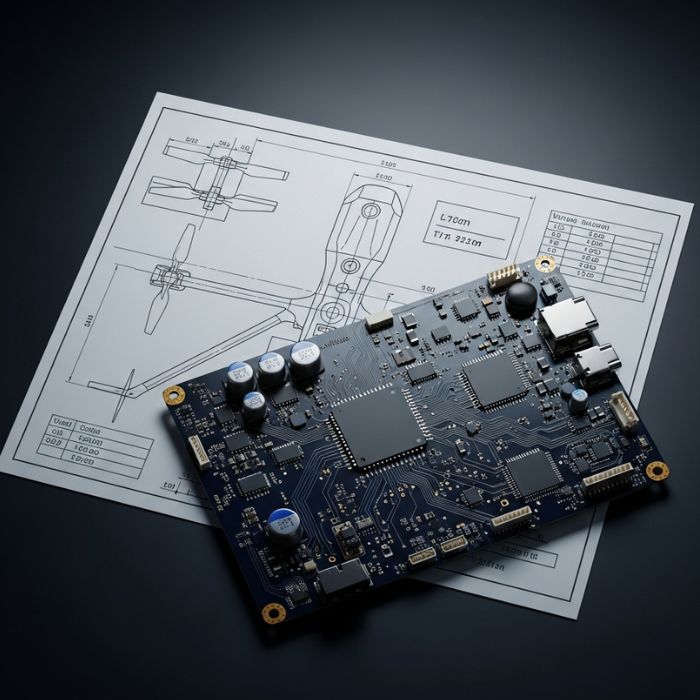
Many of the manufacturing challenges we help customers solve don't begin in production- they begin during design. Decisions made early in PCB layout often determine how efficiently a product can be built, tested, and scaled. That's why we're seeing more engineering teams bring manufacturing partners into the design process earlier, helping identify manufacturability challenges before they affect quality, schedules, or production costs.
A design may meet every electrical requirement and still create unnecessary manufacturing challenges once production begins. Components may become difficult to source, assembly processes can introduce unnecessary complexity, or layout decisions may require costly redesigns after a prototype is built. This is where Design for Manufacturability (DFM) becomes valuable. Rather than identifying issues after production has started, DFM reviews evaluate a design before manufacturing begins, helping engineering teams improve production readiness, reduce risk, and avoid unnecessary delays, which can often lead to an increase in costs.
Design for Manufacturability (DFM) is the process of evaluating a product's design before production to identify design choices that could create manufacturing, assembly, or testing challenges. For PCBs, DFM considers factors such as component selection, footprints, component placement, tolerances, board layout, assembly processes, and test requirements.
The goal isn't to change a design simply to make it easier to manufacture. It's to identify potential production issues while design changes are still practical and relatively inexpensive to make.
Today's PCB designs are becoming increasingly complex as engineers work to fit greater functionality into smaller form factors. At the same time, product development timelines are shrinking, leaving little room for redesigns once fabrication or assembly begins. Considering manufacturability early helps improve production readiness, reduce manufacturing risk, and accelerate time to market.
Successful DFM isn't about limiting innovation. It's about designing products that perform well while remaining practical to build, test, and scale.
Manufacturability depends on how well design decisions work together throughout the development process. Evaluating these decisions early can help identify potential production challenges before they affect manufacturing performance. Some of the most important considerations include:
Early engineering services and design reviews can help identify manufacturability, assembly, and testing challenges before release, reducing redesigns and helping prevent costly manufacturing delays.
DFM is most valuable before a design is released for manufacturing, when engineering teams still have the flexibility to make changes. Waiting until a prototype or production build reveals a manufacturability issue can make the resulting correction more expensive and disruptive.
A DFM review can be incorporated at several points in the development process, including during PCB layout, before design release, and before transitioning a prototype into production. The earlier potential manufacturing constraints are identified, the more options the engineering team has to address them.
Balance performance with manufacturability. High-complexity PCBs are often necessary to meet demanding performance requirements, but greater complexity also makes manufacturability more important. The more complex the design, the less room there is for manufacturing assumptions. Reviewing manufacturing considerations alongside electrical and mechanical requirements can help engineering teams identify potential production challenges without compromising the function of the product.
Engineering and manufacturing teams are collaborating earlier than ever because manufacturability is no longer viewed as a final production check. Bringing manufacturing expertise into the design process allows potential issues to be identified before they become production challenges.
Early manufacturing input helps identify production risks while design changes are still relatively inexpensive. It can shorten prototype cycles, improve first-pass yields, reduce engineering change orders (ECOs), and create a smoother transition from prototype to production. In our experience, the easiest manufacturing problems to solve are the ones identified before production begins.
PCB manufacturing decisions are increasingly being shaped long before production begins. Companies are placing greater emphasis on Design for Manufacturability to improve product quality, accelerate development, and reduce production risk.
Leading engineering teams are prioritizing:
These priorities reflect a broader shift in how engineering and manufacturing teams approach product development: manufacturability is being considered as part of the design process rather than as a final production hurdle. The value of a manufacturing partner isn't limited to the production floor. Bringing manufacturing expertise into the design process can help engineering teams identify potential issues while they can still be addressed efficiently.
What is DFM in PCB manufacturing?
Design for Manufacturability (DFM) is the process of reviewing a PCB design before production to identify potential manufacturing, assembly, or testing challenges.
When should a PCB DFM review be performed?
A DFM review should happen before the design is released for manufacturing, when potential issues can still be addressed without costly redesigns or production delays.
What does a PCB DFM review check?
A DFM review can evaluate component selection, footprints and land patterns, component placement, tolerances, board layout, assembly processes, and test requirements.
Green Circuits brings engineering and manufacturing expertise together early in the development process. Through PCB design and engineering services and prototype PCB assembly, our team works with customers to identify manufacturability challenges before they reach production.
Whether you're developing a new PCB or preparing an existing design for manufacturing, evaluating manufacturability early can help reduce production risk and create a more efficient path from design to production.
