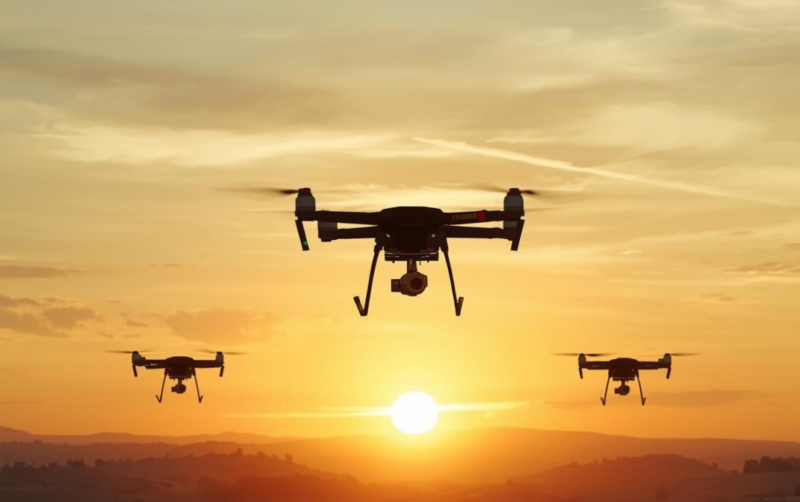
Drone platforms are evolving quickly. Autonomy is improving, payloads are expanding, and airframes are getting smaller and lighter. As a result, the electronics inside UAV systems are doing more than ever — handling navigation, sensor fusion, communications, and power management within increasingly compact designs.
This shift is changing how engineering teams approach PCB assembly. What used to be relatively simple controller boards are now dense, multi-function systems that play a critical role in overall drone performance and reliability.
Modern UAV designs are consolidating functionality to reduce weight and simplify system architecture. Engineers are combining subsystems, reducing the number of connectors, and fitting more processing power into smaller footprints. Flight controllers, RF modules, and power distribution boards are often designed with tighter spacing and higher layer counts than previous generations.
These approaches enable lighter, more capable drones, but they also place greater importance on assembly consistency. Fine-pitch components, mixed-signal layouts, and dense power sections all require controlled processes — especially during early builds where designs are still evolving.
This trend is particularly visible in flight controller architectures, where more processing, sensing, and communication capabilities are being integrated onto fewer boards.
As integration increases, the line between design and manufacturing becomes more closely connected. Small variations during assembly can influence performance, thermal behavior, or long-term reliability.
Drone programs tend to move quickly. Layout updates, sensor changes, and firmware adjustments often result in multiple board revisions within a short period. Engineering teams need the ability to build, test, and refine without long delays between iterations.
Shorter turnaround times allow teams to validate designs earlier and move directly into flight testing. Consistent builds across revisions also make troubleshooting easier, helping teams focus on performance improvements rather than manufacturing variables.
This becomes increasingly important as projects transition from early prototypes into validation builds and low-volume production. Teams that plan for quick-turn drone PCB assembly early can often move more smoothly between these phases.
Unlike many electronics, drone systems operate in motion. Vibration, temperature changes, and outdoor exposure all influence long-term performance. As UAV applications expand across industrial, commercial, and defense environments, reliability expectations continue to rise.
This has led to greater emphasis on assembly considerations, such as conformal coating, material selection, and inspection methods, to support dense layouts. Functional testing is also becoming more common, helping verify performance before boards are integrated into flight hardware.
These considerations are especially important for flight controller PCBs, where performance consistency directly impacts stability and control.
Designing with these conditions in mind helps ensure electronics perform consistently once airborne, not just during bench testing.
Many UAV programs move quickly from concept to deployment. A design may start with a small number of boards for validation, then expand into flight testing and early production builds. Maintaining consistency across these phases helps reduce redesigns and simplifies scaling.
Flexible manufacturing, quick changeover, and engineering support during NPI all contribute to smoother transitions. When these elements are aligned, teams can move forward without slowing development.
Working with a manufacturing partner that supports both prototype and production builds helps maintain continuity as programs grow.
As drone platforms continue to evolve, the electronics behind them are becoming more integrated and more critical to overall performance. Assembly strategies that support rapid iteration, dense layouts, and consistent builds can help teams move from early concepts to production-ready hardware more efficiently.
Green Circuits supports drone and UAV manufacturers with quick-turn PCB assembly, rapid prototyping, and flexible production. With six SMT lines and high-precision Juki equipment, programs can move from early builds through NPI and low-volume production while maintaining consistency across revisions.
This work is supported by a strong quality and compliance foundation. Green Circuits operates under industry-recognized certifications, including AS9100D, ISO 9001:2015, ISO 13485:2016, J-STD-001 Space and Military Addendum, and J-STD-001 / IPC-A-610.
